
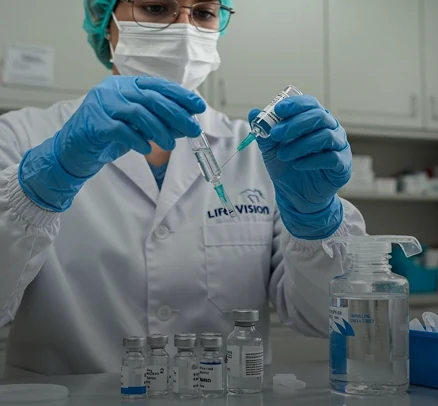
Lyophilized (freeze-dried) peptide reference materials arrive as a fine powder or a thin cake at the base of the vial. Reconstitution is simply the controlled process of dissolving that solid back into a liquid so it can be measured and studied. Done carefully, it preserves identity and purity; done roughly, it can shear or denature the peptide.
What you will need
- The sealed peptide vial, equilibrated to room temperature
- A suitable diluent (commonly sterile or bacteriostatic water for laboratory use)
- A calibrated pipette or sterile syringe
- Alcohol wipes and a clean, draught-free bench
Step-by-step
1. Equilibrate
Let the vial reach room temperature before opening. Introducing warm diluent into a cold vial encourages condensation and uneven dissolution.
2. Sanitise
Wipe both the peptide vial stopper and the diluent stopper with alcohol and allow them to dry.
3. Add diluent slowly
Angle the needle so the diluent runs down the inside glass wall rather than landing directly on the peptide cake. A gentle stream protects the molecule from mechanical stress.
4. Dissolve gently
Do not shake. Swirl the vial slowly, or leave it to stand for a few minutes. Vigorous agitation can foam the solution and damage sensitive sequences.
Common mistakes
Forcing dissolution with heat, injecting diluent directly onto the cake, and shaking are the three most frequent causes of a cloudy or under-recovered solution. If particulate remains after standing, extended gentle swirling is preferable to any form of agitation.
Research use only. This guide describes laboratory handling of reference materials and is not instruction for human or veterinary use.