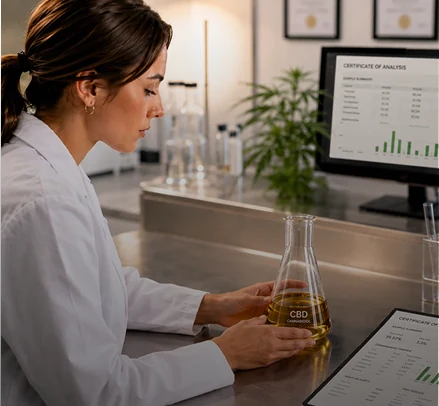
A Certificate of Analysis (COA) is the document that connects a specific batch of material to independent test results. Learning to read one turns a piece of paper into genuine verification.
Identity
The identity section confirms the material is what the label claims. It usually references the analytical method used to establish molecular identity — for peptides, most often mass spectrometry — and reports the observed mass against the expected mass.
Purity
Purity is typically expressed as a percentage from high-performance liquid chromatography (HPLC). The chromatogram shows a main peak (the target compound) and any smaller peaks (impurities). A high main-peak percentage with minimal side peaks indicates a clean preparation.
Batch / lot number
This is the single most important cross-check. The lot number on the COA must exactly match the lot number printed on your vial. If they do not match, the certificate does not describe your material.
Method and date
Reputable COAs name the laboratory, the instrument or method, and the date of analysis. That traceability is what makes the result meaningful rather than a marketing claim.
Putting it together
Read a COA in this order: confirm the lot matches your vial, check identity (mass), then check purity (HPLC %). When all three line up, you have documented confidence in the material in front of you.
Research use only.