
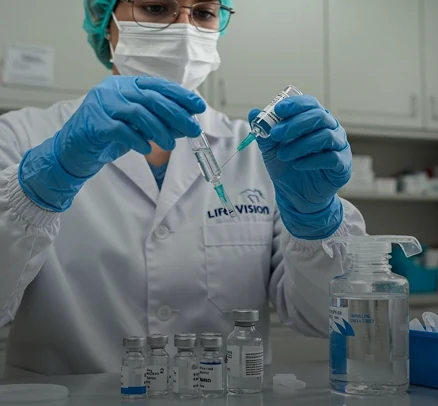
Choosing a diluent is not a trivial decision. The two most common options in peptide handling — sterile water and bacteriostatic water — behave differently once a vial is opened and accessed more than once.
Sterile water
Sterile water contains no preservative. It is free of micro-organisms at the point of manufacture, but once the seal is broken and the vial is entered, there is nothing to inhibit microbial growth. It suits single-use preparations.
Bacteriostatic water
Bacteriostatic water contains a small amount of preservative (commonly benzyl alcohol) that inhibits the growth of bacteria. This makes it better suited to a multi-access vial that will be entered several times over a handling window.
How to decide
- Single preparation, used immediately: sterile water is often sufficient.
- Solution accessed repeatedly over days: a bacteriostatic diluent reduces contamination risk.
- Sequences sensitive to the preservative: consult the material’s handling notes.
Technique still matters
No diluent replaces good aseptic technique. Wipe stoppers, avoid touching needle tips, and keep the work area clean regardless of which water you choose.
Research use only. Not instruction for human administration.